Wednesday, December 5, 2012

LARAMIE: Experiment

On June 13th, and just prior to departing for South Africa, I read an international news article regarding the brutal murder of South African gay community leader Thapelo Makutle. As reported:

A young homosexual man has been killed and his body mutilated in South Africa, according to LEGBO, a local gay rights group.  Thapelo Makutle's body was found under a blanket with his throat cut and tongue removed, parts of his genitals had been cut off and placed in his mouth, witnesses said.
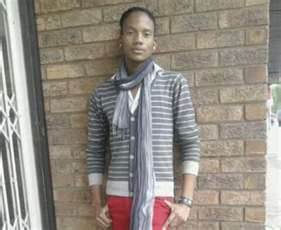
 

Fast forward to August when I engaged in a discussion with several theatre students regarding LGBT issues in South Africa.  To my surprise, the death of Thapelo went largely unnoticed.  I found this particularly disturbing since several of the students participating in the discussion were part of the LGBT community.  I later learned that much of the international news received by Americans does not reach the majority of the South African population.

Fortunately for me, I was assigned to an office at UFS with Debeer Cloete, a fellow faculty member from the Department of Drama and Theatre Arts. Debeer specializes in film studies, and his knowledge regarding the subject is expansive. This background, coupled with effective teaching and performance skills, has earned high praise and respect from students and colleagues. Toward the middle of August Debeer and I decided to join forces and produce a drama that would address LGBT issues.  Why?  Although South Africa legalized same-sex marriage in 2006, the reality is that much of SA's LGBT community is extraordinarily oppressed, particularly in rural settings. One example is the practice of "corrective rape", defined as when a heterosexual man rapes a lesbian to "correct" her sexuality.  With the highest statistics for rape and HIV in the world, the South African government does little to prosecute these crimes, which are relatively common and on the rise. To read more about this subject, google "corrective rape" or review a recent article in The New Yorker:


As Debeer and I proposed titles, I suggested Angels in America, a Pulitzer winner by American playwright Tony Kushner.  Angels takes an extremely raw look at the issues of homosexuality, AIDS, religion, politics and opposing philosophies.  This astonishing and ground-breaking play is of immense importance, and many theatres shy away from producing it due to its controversial themes.  I thought it would be an interesting choice recognized for relevant topics and challenging plot structure/complex characters.  My colleagues, all part of the discussion, unanimously said "NO".  While our theatre faculty are quite a diverse and liberal bunch who agreed they loved the play, Bloemfontein was not ready for Angels' extreme themetic nature.

My next suggestion was The Laramie Project, written by American playwright Moises Kauffman.  Debeer, who was familiar with the play, enthusiastically supported the proposal.  With my directing background and his expertise in film, we believed Laramie would serve as an excellent platform for sparking dialogue regarding LGBT issues within the UFS community.  In order to do this, we needed to make the death of American Matthew Shepherd and the experience of the Tectonic Theatre Company accessibleto the actors and audience members in Bloem.  As part of our table work, we supplied ample dramaturgical information, including videos of Fred Phelps and the Westboro Baptist Church, which was new to the production team.  We also provided info regarding the recent attacks and deaths of members from the LGBT community in SA, much of which the cast had no previous knowledge.  It was important to make certain the actors, and eventually the crew, knew they were part of something that held great significance and weight within their country.

Additionally, Debeer used to wonderful effect the interweaving of still images and video clips that would be recognized by the audience as locations in both America and SA.  Costumes also reflected this concept:  for the role of Reggie, a policewoman from Laramie, Wyoming, the actress wore the coat of a recognizable officer from Bloemfontein.  Instead of cowboy hats, male characters wore hats associated with ranchers from SA.  Dialects were not American, but reflected the diverse accents found throughout SA.  Finally, the cast consisted of black, white, colored, gay, and straight actors.

Since our concept was experimental in nature, we opted to forgo ticket sales and accept donations to benefit an LGBT campus club.  For opening night, I arranged a panel discussion with a cross demographic of individuals from UFS.  This included faculty, staff, and students from both the straight and LGBT community.  To give you an idea as to the climate towards LGBT issues, an administrator, who has a strong interest in promoting LGBT issues on campus and throughout SA, agreed to serve on the panel.  All panel members were given a series of questions which could be asked by the moderator.  It was made clear that no one had to answer any particular questions as the nature of the event was a discussion and not a debate.  The questions, formed by a theatre faculty member, were in no way devisive.  Since the objective of the panel was to encourage and generate discussion among the audience after they left the theatre, all questions were broad in topic.  I was asked, for example, to define and clarify the difference between the terms "tolerance" and "acceptance."

I was immensely surprised to open an email two hours prior to the opening performance from this same adminstrator stating that he/she did not feel comfortable with the discussion and would withdraw from his/her commitment.  No further explanation or apology was given.  We scrambled to find his replacement.

With one hour until opening, we received news that earlier in the day three transgender students at the University of the Western Cape had been brutally attacked just outside the entrance to a campus residence hall.   As reported in the news, a UWC security guard stoody by and passively watched the attack. A policeman commented that the attack was a form of "stress relief".

The Laramie Project opened and ran with great success.  However, the audience members who needed to fill the seats weren't there.  Although South Africa certainly has made tremendous strides regarding human rights issues, much work needs to be done.  Worldwide, more than 76 countries have made homosexuality an illegal crime, and homosexual acts are punishable by death in at least eight countries. The notion of tolerance is simply unacceptable.

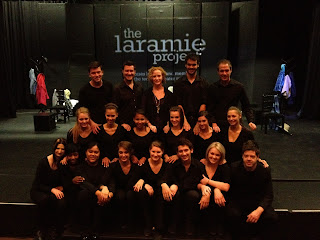


My very good friend, Debeer Cloete.


__________________________________________________________________________________

Update:
The items collected for the village of Mwariki will ship to Kenya tomorrow.  Some of the supplies collected from the recent benefit night:

Thank YOU, Indigenous Village, and to everyone else who donated to this project!


Thursday, November 22, 2012

Thanksgiving in South Africa: The Cape


Blessings were in abundance today---thanks to UFS and the Fulbright Commission, I had one of the top five experiences of a lifetime!  Great White Shark Cage Diving in the ocean off the Cape in South Africa!  Indescribable! I never imagined I would have such an up close and personal opportunity.  While under water, I was inches from the teeth of Great Whites as they missed the bait and attacked the cage.  Beautiful and magnificent.  Truly an example of nature’s perfection!
At the dive center and before the wet suit.

Attacking the bait---tuna.  This is the cage used for diving.


We encountered a total of ten Great Whites.

In my wet suit---following the dive!

Having survived my encounter with the Great White, I encourage everyone to create opportunities and pursue international travel experiences.  You never know what the day will bring! 

Following the adrenaline pump of the day’s adventure, I was on a mission to have at least one pumpkin related food item.  While walking along the beautiful streets of Mossel Bay, a man stopped to ask if he could offer assistance.  I explained I was an American on a quest for something "pumpkin" to celebrate our national holiday.  “Ah,” he said.  “Follow me.”  Just across the plaza was a grocery store with a bakery department where the baker was instructed to serve us freshly cooked pumpkin fritters.  Incredibly delicious!  When the man walked away, the baker explained that our host was the owner of the store.  Just another example of the hospitality in evidence throughout much of South Africa.  Again, I am extraordinarily thankful for the opportunity to live in this fascinating country---"Expect the unexpected" is one of South Africa's slogans.  How fitting!

Next stop for Thanksgiving?  Viewing a movie for the first time in a South African theatre.  I was a bit nervous about the experience since I'm a bit of a fanatic when it comes to movie theatre environments.  I like a quiet and polite audience.  Enormously so.  Probably to a fault.  I was particularly concerned upon learning that seats are assigned to movie goers.  And our seats were behind eleven students who had just graduated from high school.  The movie, CLOUD ATLAS, was estimated at three hours in length, so I was more than a bit apprehensive.   The audience?  Fantastic.  No texting.  No talking.  No interruptions of any sort. "Expect the unexpected."  Why do we have these problems with American audiences??

Reflections regarding the movie?  If you enjoy movies that challenge your thought process, leading to in-depth discussions regarding inter-connectivity, then run to the nearest movie theatre to see this film.  Rarely am I eager to see a film again and at the next available opportunity. The plot of CLOUD ATLAS is one that I will ponder for some time, and welcome the conversations it will provoke.
  
While I wasn’t aware that shark cage diving was on my bucket list (it mysteriously appeared today, but now it has been checked off!), it seems a good time to discuss the removal of another item from the list:

KENYA
I am delighted to report that “No Artificial Sweeteners” Improv Troupe Benefit Performance raised the following for the women of Mwariki:

16lbs of yarn
Sewing needles
Instructional Books/Manuals
$225 Cash Donations (Mailing Costs)

Using the advice of Solms (from an earlier blog post), WE are manifesting change one person at a time.  Again, I am incredibly fortunate to count among my friends the professional theatre women from our own “Indigenous Village in Pennsylvania, who have found sisters on the other side of the world.  I am sending “thanks” in a shout-out to them—with gratitude, love, and peace.

My visit to Kenya, however, included more than interacting with the women of Mwariki.  The Fulbright community is international and extensive.  In the spring of 2009, Professor Egara Kabaji, a Fulbright Scholar from Kenya, was assigned to my US office.  Since Nairobi is a mere 4.5 hrs  flight from Johannesburg, I made it my objective to visit with Kabaji in his native city.  Kabaji kindly met me at my hotel and introduced me to Nairobi.  We visited the grounds of the University, where I viewed several moments of a live theatre performance, and I marveled at the distance college students walked between classes and buildings.  In addition, Kabaji's lovely wife invited me into their home for a traditional Kenyan lunch.  The function of the delicate sink in the dining area, which seemed peculiar, was made clear when utensils were not provided.  After a delicious meal comprised mostly of vegetables, Kabaji and I traveled to a local publisher’s conference where I had the opportunity to meet editors from numerous national and international publishing houses.  Then it was back to my hotel to meet the group with whom I would spend the next several days traveling through Kenya.

With a few hours to kill prior to departure, I opted to visit the local art market which, following the advice of the hotel concierge, would require the hiring of a driver/body guard.  Quite an excellent suggestion:  the market was overwhelming, with 4-6 men at any one time crowding my personal space in an attempt to direct and obtain what business I was providing.  This detracted from the market experience and made it difficult to view the art work.  On the other hand, the concierge’s advice proved wise.  As a woman who is clearly not a resident of Nairobi, I was happy to have a man approx. 6’4” and topping out at a minimum of 250lbs as my companion.  Incidentally, James spoke seven languages, including Japanese and Spanish.  The cost of his services was worth the pittance I paid.  I tipped him generously.


After meeting my travel companions, we departed Nairobi early the next morning and visited an orphanage about one hour outside Nairobi and on the way to the Great Rift Valley:


My bucket list has always included a visit to the Masai of Kenya.  One of the indigenous tribes of Kenya, the Masai value cattle as a symbol of wealth.  The role of the Masai males is to tend the herds of cattle and protect the village.  Masai women are responsible for constructing houses and managing the household.  Houses, largely composed of cow manure, are small and dark.  Which makes sense since nearly every task is performed out of doors. 

Our guide knew a few Masai personally, which ensured that our visit was a bit different and more personal than the usual “tourist experience.” 

The women of the village.


Warriors wear the fur of animals they have killed.  Warriors become men at age 16.


Jumping is a mating tradition.  The men jump as high as possible to attract the female.


The chief's son is looking through binoculars, which I provided, for the first time in his life.  He is wearing a lion's mane on his head---he killed the lion.


A warrior with whom I traded jewelry.

The scar from a lion attack.

Starting a fire.


The Masai I encountered are beautiful people linked to the earth.  They live simply with few material objects, and share a profound understanding of the importance of family and relationships.  The chief’s son communicated to me that a white woman from America married a Masai and currently resides just as any other female villager.  I wish I had the chance to speak with her, for I’m curious about the life in America she abandoned to live an extraordinary and alternate lifestyle in Kenya.  Is she fulfilled?  Content with her new life?  Ever homesick?  What does she miss (or not miss)? 

Of course a trip to Kenya would seem incomplete without viewing the abundant game, which was at its best in the Masai Mara Reserve.  However, I'll load those pics in a later post.

I should mention that having a Boomslang fall out of a tree at night and attach itself to the opening of my tent was…..well……surprising.  Boomslangs are one of the most venomous snakes in all of Africa.  As for me, I knew nothing about Boomslangs until a Masai warrior, who guarded our tents in the evening, did not hesitate to dispose of this deadly snake.  I was thankful for the presence of the warrior, and was reminded of the fragility of life in the wilds of Africa.

Comparing and contrasting Kenya and South Africa?  I can offer very little.  My experience in Kenya provided a small window of observation.  I encountered few white people.  Everyone I met was open and friendly.  Unlike the vast economic disparity of South Africa, the population of Kenya seems to remain overwhelmingly impoverished.  While the infrastructure of South Africa is highly problematic, most Kenyans seem to exist in what I can only describe as a severely challenged society.  I must emphasize the warmth of the Kenyan people I met.  Strangers, including children, would often approach me, shake my hand, introduce themselves, learn my name, then walk away.  No one ever requested or begged for money in Kenya, which is a common occurrence in South Africa.  In both countries I frequently encounter individuals living in horrible conditions who extend kindness and generosity.  I find myself reflecting upon the hospitality we as Americans extend to foreigners.  I think we can do better.  I will do better.  

I am thankful for my many blessings, which are abundant.

Friday, November 9, 2012

Linking Sister Villages: US and Kenya

I am very fortunate to be part of a group of professional theatre women who greatly enjoy occasional get-togethers and outings which always guarantees wonderful camaraderie, insightful humor, and spontaneous behavior. We aren't a club by any means, or a professional organization.  Frankly, our time is spent sampling adult beverages, sharing tapas, and laughing until we cry. Literally.  Late one evening, we decided to band together and form our own sort of "indigenous village", although I must admit the definition eludes me (us) to this day.  I recall it had something to do with horrible holiday themed sweaters....   I am blessed to call this somewhat eccentric collection of intelligent and creative women my friends.

Among the elements that bind us together is a strong desire to support women in need.  Women helping women.  My work as a Fulbrighter has frequently brought exposure to numerous situations in which my immediate thought was "How can I help?"  Or, more importantly, "How can I NOT help?"

During a recent visit to Kenya, I visited Mwariki, a small and somewhat remote village where I met a woman, Eileen Waithera, who served as my guide and translated when necessary. Since 2007, due to tribal warfare and economic strife, the majority of the Mwariki's men either died or did not return to their homes and families. As a result, the women did (do) not have a steady source of income to purchase even the basic necessities of clothes, food, and shelter for their children.

Recently, Eileen worked with the women to create sustainable projects that would support the purchase of food and shelter, and quality education for their children. A co-op was formed to serve the community as a whole. Funds are pooled to send the brightest children to university so they will return and share their knowledge to the benefit of Mwariki.

Some of their immediate goals and projects:
1. Fish farming: experts were brought to the village to teach the women how to create a hatchery in the village. The "hatchery" is a large hole in the ground, which the women aerate daily. Each year, over 3000 fish are supplied to area restaurants.
2. Construction of a "house" for HIV positive children: HIV is an epidemic in Kenya, and support services are essentially non existent. I saw the house the women have built for the children. Small and very, very basic. But it will provide shelter and love for the patients upon completion.
3. Funds are pooled to purchase land: the women currently rent land and houses. They are working together to own the land and houses.
4. Clean water harvesting: the local water has dangerously high levels of fluoride that leads to flourosis skeletal and non skeletal disease. They are trying to purchase water tanks to hold clean water.
5. Loans of 1%: the women are working collectively to raise enough funds to offer loans that carry a 1% interest rate towards small business practices.
6. Purchase of sheep: they need sheep! Why? Because most of the women are knitters, and sell their knitted projects to support the collective.


 This hut is made from recycled water bottles.  It provides clean water for hand washing.  Water pours from the jug when pressure is placed upon the wooden plank.  The women in the photo is Eileen.
Some of the knitted products created by the women.

All wool is spun by hand.


This little girl followed me everywhere, but I
could not get her to smile.  Haunting.

 Mwariki's school.


After completing the tour and making a few observations, I spoke with Eileen regarding an idea that began to formulate.  I noticed the women's knitted products were rudimentary and involved simple patterns using only two or three stitches.  The women could clearly knit, but lacked the knowledge base to create and design more advanced----and thus more marketable----work.  Would the women welcome the idea of learning new stitches and techniques?  With an overwhelming, enthusiastic "Yes!" from Eileen, I was on my way to linking the Indigenous Village in the States with Mwariki
village in Kenya.

After making contact with the village in the US, members devised the idea to create a fundraiser:
On Wednesday, November 14th in the Gamut Theatre located in Harrisburg, PA, the all-female improv comedy troupe No Artificial Sweeteners is hosting a special performance to serve as a benefit for the women of Mwariki.  Audience members are asked to bring knitting books (paperbacks are best), yarn, or money toward the purchase of these items, which will be shipped to Kenya in time for the holidays.


Perhaps it is now clearer why I'm blessed to be part of an Indigenous Village in my own country.


Monday, October 29, 2012

Pilot Project: Complete

The project, which brought weekly theatre workshops to a set group of 16 "learners" (what South Africans call students up to age 18) from a township school, is complete.  The students from UFS who served as Assistant Teachers suggested a sort of  finale to honor our group's dedication and commitment, which we delivered.  After transporting the 16 "learners"  from their school to the UFS campus, a full day of theatre activities commenced.

We arrived on campus for a dance workshop led by a professional choreographer and assisted by a few of my college students.  The workshop was held in the large movement room in one of the theatres.


A male teacher from the school, who accompanied the group, told us he had never seen the children so happy.  Indeed, we paid particular attention to the girl who is the second from the left in the video.  She had a very meek voice, and we could not get her to remove her hand from the front of her mouth.  The hand always trembled when she was spoken to, and we suspected something traumatic had happened at some point in her life.  This is no small surprise when you consider that South Africa has the highest incident of rape in the world, and that Sub-Saharan Africa holds the record for HIV-AIDS.  Life expectancy in South Africa is 51.2 years.  The graduation rate for 2011 was 70.2%, but only 23.5% qualified for entrance into any higher education degree program.  This number is expected to drop severely due to recent government corruption that resulted in non delivery of text books to hundreds of thousands of youth.  The 2012 school year will soon end, and the books still sit in a warehouse, never having reached the schools.

You'll see that in the video, the girl has lost all self-awareness.  The arts have a tendency to do that.....

Following the workshop, we had a buffet lunch, which produced the most enthusiastic eaters I've ever had the pleasure of dining with.   We then drove the learners through our beautiful campus, and tried to stimulate their desire to consider higher education.  Next stop---our rather large proscenium theatre where our guests were given a tour by the Assistant Theatre Manager, and through him  learned a variety of stage terminology.


We had discovered during one of the workshops that not one of the students had ever entered a movie theatre. In fact, I recently had a conversation with a black lecturer at UFS who told me that his first  movie-going experience was in his 20s. This is not due to a lack of theatres, which are relatively abundant, or inflated ticket prices.  When you can not afford  pap (porridge) for your children, the idea of a movie ticket becomes unattainable.  Unreachable.  Foolish to desire.

With this in mind, my UFS students suggested taking the group to a movie theatre.  I asked for sponsors to pay for the tickets, but no one felt the learners were a worthy endeavor.  One of my colleagues suggested closing down the large proscenium theatre and showing  a movie privately.  The white cyclorama behind the children turned into a giant movie screen with stereo sound and crisp video images.  We deliberated over appropriate titles.  Consideration regarding the ability to understand content became paramount.  And we settled on.....Nemo!  One of the girls turned to me, gestured for me to bend down to her level, and said, "I'm so happy.  Thank you."  And that's all we needed.

The day ended with official certificates of completion for all, and a group photo for each young actor to carry home.  There were many tears, and not just on the part of the children.

We then returned the children to their homes in the township.

 This isn't the greatest picture to indicate how far in the distance the tin shacks can be seen.  But they do stretch into the horizon.  Trash collection does not exist.  And children are frequently seen picking through huge piles for food and other usable items.


In the end, I think we gained more from the experience than the learners.  I know I did.  And my students and colleagues, all South Africans, seemed to have found a new perspective as to how devastating the poverty actually is.  I believe, in the end, they learned that you start with just one person, and a desire to do better in the world.